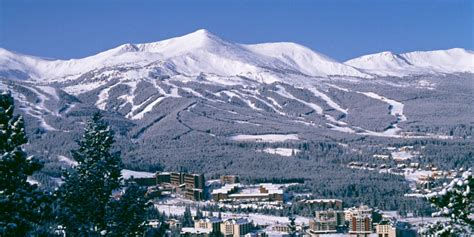
Breckenridge: Rick & Levi Tell All
- John Morgan
- Dec 10, 2025
- 21 min read
Updated: 5 days ago

Breckenridge is one of Colorado’s best known ski towns—but as any local will tell you, it’s far more than the crowds, the gondola, and the iconic mining-era Main Street. In this episode of Where to Ski, host John Morgan sits down with longtime Breckenridge's legend Rick Asher, owner of Pup’s Glide Shop, and his son Levi, Rick is a transplant who just loves this place, loves to ski and saw it grow. Levi, his son, is a lifelong Breckenridge skier born and raised on the mountain who loves to ski when he's not judging freestyle events all over the world. Their combined 60+ years of experience reveal what Breckenridge really skis like—where to go, what to avoid, and how to unlock the best terrain on the mountain.

A Real Mountain Under the Hype
Founded in 1859 and launched as a ski resort in 1961, Breckenridge spans five peaks, 2,358 acres, and rises to 12,800 feet, offering some of the highest lift-served skiing in North America. That altitude delivers Breck’s legendary light, dry Colorado snow, but it also brings wind, weather, and fast-changing conditions that only insiders truly understand. Rick and Levi say Breckenridge has terrain for everyone: beginners, intermediates, experts, and big-mountain skiers willing to hike for the goods. But knowing where to start your day matters.
Beginner & Intermediate Terrain: Where to Find Your Flow
According to Levi, Peak 9 is home to the best beginner terrain—wide-open, sun-filled runs perfect for new skiers or early-morning warmups. Intermediates can explore nearly the entire resort, but locals swear by:
Peak 7’s Independence Chair for long, consistent blue cruisers
Peak 9’s Mercury & Beaver Run Chairs
Peak 10 for high-speed groomers like Cimarron and Centennial
For lunch with a view, Rick recommends Pioneer Crossing, Overlook Restaurant, and Ten Mile Station.
Expert Terrain: Bowls, Hikes & Powder Stashes
Breckenridge’s advanced skiing is what converts skeptics. The Horseshoe Bowl, Imperial Bowl, and the high-alpine above Peak 8 offer wide-open steeps, chalky wind-buff, and lines accessible via the iconic T-Bar and Imperial Chair—when they open. Wind and avalanche control often delay opening until late morning, so many locals head early to:
Levi’s perfect morning? “Four or five untouched runs before the T-Bar opens.”

Dining and APRES!
Breckenridge has some great options here. You can start at the Tbar and then head to town. You will have to listen to the episode to get all the details..
Why Breckenridge Stays Special
From world-class wind-buff to historic watering holes like The Gold Pan, Breckenridge blends authentic mountain-town charm with huge, varied terrain. With the insight of Rick and Levi from Pup’s Glide Shop, visitors can ski smarter, explore deeper, and experience the Breckenridge locals love. And while you are there, get your skis tuned at Pups.
Episode Transcript
Welcome to Where to Ski. I'm your host, John Morgan. We're headed back to Colorado.
Let's strap them on. We're going to Breckenridge. For years I avoided Breckenridge.
Too kitzy, too crowded, too corporate, so many excuses. Then I spent some significant time skiing there. And there's some real deal skiing.
Founded in 1859 as a supply town for gold prospectors, Breckenridge wasn't on the ski map until 1961 when the first trails were cut, and it's just grown since then. Two hours from Denver on the far side of the Eisenhower Tunnel, it can be an easy day trip from Denver. That's a plus and a minus.
This resort covers five peaks, it's big. Skiing starts in November on both man-made and natural snow. With 2,358 acres of skiing and an elevation at the tippity top of 12,800 feet, it has some serious vertical that's designed for every skier.
That altitude makes for some good light snow. It also means you're close to the jet stream, and Breckenridge can get some real wind when it blows. The town is awesome.
One of those historic mining towns that Colorado has dotted throughout all of its mountains. Now it has small shops, few chains, a whole range of bars, restaurants lining the main drag, which is Main Street. Our guest today, Rick Asher and his son Levi.
Rich is the owner of Pup's Glide Shop in town, started the ski shop years ago, and works on skis for every decent skier in town. He also gets to ski with them, and he almost has a doctor-patient relationship with every one of them. So after this quick break, we'll talk to Rick and Levi and find out about the real Breckenridge.
Rick, Levi, welcome to Where to Ski. We're going to talk about Breckenridge today. I'm really excited.
You know, really, thank you for joining. You're welcome. Happy to be here.
Rick, maybe you could tell me a little bit about your own history and how you ended up in Breckenridge. Okay. I grew up in Minnesota, northern Minneapolis, and I was on the high school ski team.
And my ski coach from my ski team, Anoka High School, his name was Jeff May, when I graduated from high school, he was already planning on moving to Denver. Well, once he moved to Denver, we followed him out here, me and another buddy. And then it just so happened that he ended up knowing somebody through rugby that had a shop in Breckenridge.
And another shop was looking for a manager, so he got the manager position, and he dragged us up here with him. So that was 1979, when I came up there in September. Wow.
That's a long... You've been there a while. Yes. I've seen a lot of interesting things go on here.
Yeah. Well, I bet. I bet.
Levi, you were born up there, right? Yes, indeed. Born and raised. So you've been skiing this hill from day one.
You can say that, yeah. Absolutely. He was in ski boots before he could walk, okay? We put him in adult ski boots with his onesies on, and he'd just sit there and wobble around.
And then he started walking at nine months, and at 11 months, we had him in boots and skis up on the hill. And that's the same with my dad in Geneva. They both started skiing at 11 months.
That's pretty early. Wow. It is pretty early.
It's earlier than I... I started when I was three. Yeah. That's kind of the norm.
Three. But my wife and I, her name is Annie, we both have the passion for skiing. And we'd get the kids up there.
I think the first time we took them out, they fell asleep in our arms going down Trigg Beach. Okay. All right.
Breckenridge is really easy to get to. It's like two hours from Denver from the airport, as long as you don't hit any weather on the pass or something. But it's, you know, a couple hours, done deal.
You get to Frisco, hang a left, and then you just go up the hill. When you come into town, it's pretty cool. You guys live it every day.
But when I get up there, it's like, oh, I've gotten back in time a little bit, sort of. You know, everything looks old, and there's a lot of cool little shops and stuff. And you got the whole ski area up there on the right.
What kind of changes have you guys seen in the last few years, like the last four or five years around downtown? Well, let's start with when I moved here. There was no stoplights in town. The roads were dirt.
There were boardwalks instead of sidewalks, okay? And then I came here at the end of an era. There was miners and hippies hanging out at the gold pan. And the hippies were skiers, you know.
But over the last few years, the town is almost built out in terms of housing. But they keep building bigger and bigger timeshare complexes in town. So if you get into Main Street, there are a lot of historical buildings there that house a lot of great shops.
Yeah, and bars and all sorts, and restaurants, bars, you name it. The gold pan is one of the oldest operating liquor licenses west of the Mississippi. Okay, gold was discovered here in 1959.
I think the gold pan opened in like 1961. Really? Yeah, they're still there. I mean, it was a tent bar back in the mining days.
And obviously, they started building here. So Main Street has still maintained a lot of its character. That's what's kind of cool about it.
You know, I spent years avoiding Breckenridge because it was so close to Denver. I thought it was sort of a manufactured ski area. Then I started skiing it.
You know, what changed your mind? Why did you ski away? Well, I went skiing with some friends there. And they took me and run me all over that mountain. And there's some really good skiing.
There is. And I was like, wow, okay, now I get it. And I've been going back to Breckenridge.
You know, I try and get there like once a year at least. And it's easy to get to. The skiing's good.
You know, you can always get good skiing. Avoid the weekends and Fridays. Fridays and the weekends.
Yeah, well, yeah, I know. Friday's the new Saturday. Exactly.
Yeah, it's brutal. And there's really only two ways up under the mountain. You've got the gondola right out of town.
And then you've got like over by Lift 9 or Peak 9, that side. Well, you know, that's true to a point, but not necessarily. They have outlying parking where you can take buses.
You know, there's basically almost three base areas. Peak 9 is a good one for learners and intermediate skiers. You can take the gondola up, but Peak 8 gets really crowded with the gondola.
But when you take the gondola up, you can get off the gondola at Peak 7 where Independence Chair is. And that distributes people to the north where you can go towards Peak 6 as well. I've never gone that way.
You know, when I got up on the gondola, I've always hit the dogleg turn and stayed on. I've never gotten off there and jumped on the lift. Sometimes it's easier to get off the lift at Peak 7 than it is to go to the base at Peak 8 because Peak 8 gets so congested with people.
Yeah, there's so many lifts there at Peak 8 that just sort of feed right out of there. You've got all these super chairs. Yeah.
Yeah, it can get congested. And that's actually a good point. That's a great way to go in.
I would avoid Peak 8 as much as possible. If you can get off at Peak 7 to do the Independence Chair and go to Peak 6 or take the bus and go to Peak 9, it distributes people better. Peak 8 is just so congested.
It is. And, you know, if it's the middle of the week, it's okay. If you're getting near anything crowded or if there's some, you know, really if it dumped or something, it makes it harder.
And it always dumps on a Friday. If you're lucky, it dumps enough that they have to close the road out. That is some of the best days.
So Bergen Ridge has got terrain for, like, everybody. Yes. It's pretty even split for beginners and intermediates.
And then there's some really good expert skiing there as well. Let's spend a minute talking about beginners and intermediates because you can really ski a lot of this mountain if you're an intermediate. Beginners don't stay beginners very long.
They take a few runs and just go. So where's a good place for intermediates to go? You know, you said jump off at Peak 7 or even Peak 9 or, you know, it's pretty much anywhere down the base layer. Yeah.
Peak 9, the Mercury Chair and the Beaver Run Chair, that serves us a lot of intermediate terrain. And if you get ballsy, you can go over to Peak 10. They got a lot of really good groomers over there.
And if you go off the south side, they got really long bump runs, you know. But if you get off at Peak 7, the Independence Chair is just an intermediate's delight. Now, for beginners, you know, Peak 8 has very little beginning terrain.
They have triggies basically on that side of the mountain. But Peak 9 probably has the most beginner terrain. And that's got some good places to go on.
It's got good, long, wide runs. Yes. And, you know, fairly gentle terrain.
Yeah, it is. If you wanted to, even experts can take some warm-ups there and just rip some runs. You can.
I've done that first thing in the morning and it works out pretty well. And Peak 10 is good for that, too. Because, you know, they groom Centennial, what's the other one? Cimarron.
Cimarron. There's some really great long cruises there. Peak 10, I love skiing Peak 10.
You can just do laps on that one. But that's more, I always think of that as more advanced. It is.
Absolutely. Yeah. Even the groomers there.
I mean, it used to be a World Cup downhill course on Cimarron there. GSs. World Cup GS.
Really? I didn't know that. I never knew that they ran a World Cup up there. Back in the late 80s or 90s.
That's pretty cool. It was. That's a great set of runs.
You know, Marchiardelli, Tomba, those types showing up to race. It was really exciting. God, I thought they only went to Vail and Aspen back then.
That's where they're going now. And Copper. And Copper.
Yeah, they're all in Copper now. Skiing some pretty narrow stuff. What I call the White Ribbon of Death.
Yeah, a lot of people call it that. Let's not call it that. Let's call it the White Ribbon of Joy, okay? Because it's early season skiing, but we are skiing, you know? You look around the other parts of the country, there's not too many lifts turning right now.
No, it's still early. We're recording this in the middle of November. And I don't count on any skiing with any decency until even the third week of December.
I concur with you on that note. The Foxes could open up at any second. We could start getting dumped on them.
We've seen it before. Right now, we've had one of the best fall early winters in a long time. So for intermediates, they'll go off, they'll ski.
They can ski pretty much anywhere on the mountain. And it's pretty easy because every lift has got the map right on it, right on the bar. Pretty much.
You can sort of see, while I'm going up and I can see a blue, I can see a green. And Breckenridge is sort of known for having the grading system down a little bit. So things that are marked black at Breckenridge might be like a blue in some other places.
Could be, you know. Yeah. And then there's some of the double blacks and stuff like that.
And we'll get to those in a minute. OK. But you can ski really from part to part on that mountain.
What are some good places to stop, for example, when you've taken your four runs in the morning if you're an intermediate? There's a couple of huts up there that are pretty good. Well, Levi? Yeah, if you're starting over on Peak Nine, we think the Overlook Restaurant is a great spot. It used to be called the Peak Nine Restaurant.
My elementary school gym teacher used to own it before the resorts took over. And then, let's see, Ten Mile Station is another great spot up there. That's kind of where ski school and stuff will take their lunch.
So it can get a little busier during the daytime. It's got good sun. It does.
That is true. But Overlook Restaurant over on Peak Nine. And then on Peak Seven, they just built a new one called Pioneer Station, Pioneer Crossing, something like that.
And that's a beautiful building, great big windows. So no matter where you're sitting, you've got a great view of the valley. And that's a spot I like to stop at.
Actually, I haven't been over there. That sounds pretty cool. OK.
I'm going to check that one out this year. Absolutely. And they're talking about opening up the warming hut, or serving some food with a cart, I mean a trailer or something, at the bottom of Peak Six.
They had that a couple of years ago. And they took it up. But there is a warming hut where you can warm up and take a piss, excuse me, use the bathroom and maybe get a snack out of a vending machine.
But they're talking about reopening that with food adjacent to it. That's kind of cool. It's sort of like a food truck up a hill.
It is. That's what it was exactly. Oh, that's pretty awesome.
You get your taco, and you just ski up to the food truck, grab your taco, and keep on going. Eat it on the chair and get out of there. Keep moving.
And at the base of Peak Eight, they have the, it's called the T-Bar Bar and Grill. And they serve warm drinks and stuff. And it's a bar, but they also serve food, I believe.
And that's at the base of Peak Eight by the Colorado Chair. Yeah. And there's, at the bottom of almost every lift, there's places to go to.
And that's a different story, because you get stuck down there and not make it up for the rest of the day if you start doing that stuff. Exactly. We've seen it happen.
Yeah. Well, now, let's go on to more advanced skiers, like experts. There's some pretty cool stuff.
And this is what got me hooked on Breckenridge. You know, I got taken, the first thing I got taken up to was the Horseshoe Bowl. And, you know, it sort of intimidates people that aren't experts, because you get on, gee, God forbid, a T-Bar.
Yeah, snowboards especially. You go up there, and there's some terrain. There's some skiing up there.
It's not all groomed, you know. What's your go-to when you go out? Levi, tell me where you would head right up. You've been doing this a while.
Well, if I told you where I would head right now, then everybody would know. Yeah, we're not going to do that. No, like we were saying, though, about how there's intermediate terrain kind of all over.
You go to Peak 9, a little bit on Peak 8, Peak 7. It's kind of the same way for the expert terrain. Every peak has a little bit to offer. If you can find your way into the valleys down low, there's usually some good stuff.
North side of Peak 9, skiing 5 chair. North side of Peak 10 or the south side of Peak 10. North side if you can handle the bumps, because there's some long bump runs down there.
Or up there, I suppose. And Peak 6. Yeah, Peak 6 has become... I don't want to say it's become. It is a great spot for really expert skiing.
There's tons of cliffs. They actually hold a bunch of freeride contests up there now. Yes, and most of that is going to be hiked through terrain.
A lot of the good stuff at Breck, you're going to have to take off the skis and throw them over your shoulder for 5 or 10 minutes. So not a big hike, just 5 or 10 minutes. That's not bad.
You're not going like 30 minutes and packing a bit. Depends upon how strong you are. Yeah, no kidding.
Usually when I throw my headphones in, by the end of the third song, I'm at the top. So it takes 15 minutes probably. And you can do that at the top of going to the lakesheds too.
Hey, I've never skied Imperial Bowl for some reason. I don't know why. What's that like back there? It's almost pretty solid intermediate stuff.
Intermediate to expert. The bowl has a lot of different terrain on it. It's evenly pitched all the way around the bowl.
And that's where you can hike to the lakesheds. But I think solid intermediates, lower experts, people really enjoy that. And it's a really quick lift.
And the problem with Peak 8 is, and it's a curse and a blessing, it's conundrum. When it snows a bunch, the T-bar won't open. And patrol have to do their avalanche mitigation.
So it could be anywhere from quarter to 9 to 11 o'clock before they open. So you stand around. I've spent many hours standing around waiting for stuff to open.
And then Imperial is the same way. They have to do control work on Peak 7, whale's tail and all that stuff. So sometimes that doesn't open until 11 in the noon.
So sometimes it's better, instead of waiting at the T-bar in Imperial, to go to Peak 6. Because that generally will open early with good terrain. Or go to Peak 10 and ski the north or south side. Or do the north side of Peak 9. No.
Because otherwise, you're standing in line a lot. OK. Yeah, and a lot of times what I'll do when I go up there is, I always warm up on something that's been cut.
And so I pull up the app, look and see what's been groomed, go find something that looks enticing from the app that's been cut, and just go crank out a few runs. And then go find something fun. That's always a good thing to do.
Instead of standing around waiting in line, go get a couple runs knocked out somewhere, you know? So where do you start when you go up? Let's say it's an empty day, no power. It's just a groomer day. Where do you start off your days? I can tell you where Pup goes for his groomer days.
He's got A, B, and C, or D as he calls it. Take the rocky chair up from the base of Peak 8, rocky mountain super chair. And then as you work your way north from there, there's Dukes, North Star, and Claim Jumper.
Am I missing any? Underneath the Indy chair. And then, yeah, the next one over from Claim Jumper underneath the Independence chair. So on a groomer day, he'll do those three or four runs, and then get out of there before the crowds show up.
You see, I usually get there. I've got a really good parking spot up there, okay? So I don't, I mean, I can ski to the lift and ski to my truck. But on a powder morning, if it's four, five, six inches, we're generally first chair.
So we get first tracks generally down Dukes, North Star, and Claim Jumper. And then we'll hopefully, the T-bar will be open. Or stand in line for a little bit to get the T-bar to open.
Or know one of your ski patrol buddies that'll go up early with you. So Levi, you have a different plan, I bet, in the morning than your dad does. Not really, yes.
Everybody does. Where do you start off in the morning? Let's see. Well, depends what kind of day it is.
Like he was saying. If I'm getting up there early and there's a little bit of snow, I like to ski the south side of Peak 8 while I'm waiting for the T-bar to open. So runs like Tiger, Southern Cross, yeah, Mach 1. Those are good spots.
It's a little more protected down there, so you stay out of the wind and out of the weather a little bit. And there's a lot of different places you can go in there where you can find secret stashes. So that's where I try to stick to.
If it's a morning where I'm going to be in and out of there especially, sometimes you can get four great powder runs before the T-bar even opens. And that's perfect. That's perfect.
So that's like my perfect day. If I can go four or five runs and not cross any tracks, I'm doing okay. And then it's time to go.
You know, not everybody can spend all day at their ski. We've got stuff to do. Like, watch The Price is Right.
Yeah, about two in the afternoon. It gets a little old, but that's okay. No, we're fortunate.
We're fortunate we can get in and get out with a few good runs. The other thing, Levi, did you ever use the terrain parks? I was an avid user of the terrain parks. Like a lot of Vail resorts, the terrain parks were kind of squashed about, I don't know, five, ten years ago.
Maybe not ten years ago. Five-ish years ago. So when I was in high school, I'm 29 now.
When I was in middle and high school, the Breckenridge parks were world class. Same with Keystone just down the road. It was a destination terrain park, absolutely.
And Vail resorts at some point decided that wasn't a priority for them. And the terrain parks had kind of been cut out. Not completely.
Freeway is the name of the terrain park that was world class. It hosted the Dew Tour, the Honda Ski Tour, if you want to go way back, North American Open. And like I said, a real destination.
On any given day, you'd see the cream of the crop. Professional skiers and snowboarders training in those parks. And nowadays, that freeway terrain park, when I ski past it, I just kind of look at the ground and shake my head, thinking about what it used to be.
It's definitely not... It's more tame. It's more tame. And I don't want to show disrespect to the park crew because they do work hard.
But the standard isn't what it used to be. Okay. No, that's helpful because, you know, I go up.
I don't do terrain parks. I look at those things. I look at the pipes and stuff.
And there's a couple of big pipes up there. Yeah. And that was another one.
The Breckenridge Half Pipe was world class. I remember looking through a free skier magazine one time. And there was... Candide Tovex was doing a trick in the magazine that said he traveled all the way from France just to ski this half pipe.
And, you know, I was 10 years old. I was like, that's amazing. No one's doing that here for Breck now.
Not for the terrain parks. Okay. Just down the road, Copper Mountain, they're still doing a great job.
And they host the events now. So locally, you can still go get some good terrain park riding. Interesting.
Well, there's a group of people that like that. I'm not in there. You know, I get... I try and keep my feet on the ground.
You know, I like skiing through the terrain park between the jumps on a powder day because nobody skis that part. Okay. So sometimes you still get some freshness between the jumps.
On the nice deep landings, if no one's skiing the part, you can get some face shots in there. No doubt. Don't tell anybody.
We'll only tell a few thousand people on this one. It'll be bugged out before you know it. Breckenridge gets some weather, obviously.
You get snow, you get wind. You know, it's really high up there. It's 13,000 feet.
It's the highest chair, right? Yeah, but then you can hike above that. But on those windy, stormy days, the upper height to terrain is generally not open. And because of the weather, sometimes the lifts are shut down due to weather because of wind, you know.
Well, you got to sort of plan your day around the weather a little bit. If you get a dead calm, beautiful day... Get out there. Yeah, get out there.
But how do you ski the mountain? Do you try and stay in the sun or do you try and stay out of the sun? I try to keep up with my son. We all do that. No, um... You know, the sun... The north-facing stuff is generally better, but on spring days, follow the sun, okay? I mean, it's nice to get sunny stuff, but the stuff north-facing in the shade is generally the better skiing, you know.
The snow holds up better. But in the wintertime, it doesn't really matter. In the springtime, the sun will soften stuff up for sure.
For example, where I told you I like to go when there's a few inches of snow, down on the south side of Peat Gate, if there's no snow there, you're going to be running into crusty conditions. If the sun's been on it for a few days, it's not going to ski well. Frozen coral.
Yeah, absolutely. But, you know, that's why I like skiing some good coral, but that's later in the spring. In the deep part of the... Sometimes travel adventures don't play out the way you think.
Shit happens on the road. We partnered with Global Rescue for world-class travel protection and travel insurance. Trusted by adventurers worldwide, Global Rescue membership ensures emergency medical evacuations, field rescues, and medical advisory services no matter where your adventure takes you.
Paired with IMG travel insurance offered through Global Rescue, you get comprehensive coverage for trip cancellation, medical bills, lost luggage, missed connections, and more, protecting both you and your trip. While Global Rescue keeps you safe in the field, IMG insurance covers the unexpected costs. Together, they're the ultimate protection for adventure seekers.
Whether you're headed to the Vallée Blanche or taking skiing and wildlife in Norway or Alaska, enjoy your experience with peace of mind knowing that Global Rescue has your back. Nobody wants to imagine an emergency on a trip, but when the unexpected does happen, you want the team of medical and security experts at Global Rescue to be there for you. Memberships start as low as $139.
Hit the link on our website wheretoski.org or use code WHERETOSKI, all one word, to find out more. Getting back to the wind and the cold, you know, there's a number of terms for Breckenridge. Some call it Breckenfridge.
Yeah, I've heard that. I've heard that. Or Breckenwind.
But, you know, when it's really cold, you know, a lot of the good skiing is about tree line, the T-bar or anything else. If it's open when it's those kind of blizzardy conditions, but sometimes it's the best. You just got to wear good clothes, you know.
And the wind can really be nuking. But what the wind does as well, it creates wind buff in a bunch of different areas on Peak 7 and Peak 8 where it's nice and smooth on the steeper terrain. And it's chalky, coverable.
It's nature's grooming, basically, you know. And it's really special. I hadn't thought of it like that, but you're right.
And as long as there's not a ton of wind, you know, the cold is fine. And it does get cold up there. But once you take a couple runs, you know, you start warming up most of the time.
Yeah, and if you're up high on T-bar or Imperial and you start getting cold, you're awful close to the Vista House or that Pioneer Station that I was talking about. At the bottom of any, you know, no matter where you are, you can take a 30-second run and you're at a nice warming hut. So what should people stay away from, except the base during the middle of the day? T-bar, Imperial.
Stay away from wherever I'm skiing. Well, you know, the congestion at the bottom of Peak 8 is really the thorn in Breckenridge's side, you know, because there's only so much parking in this town and they've got a parking structure. There's a fair amount of parking at the Gauntlet, which we're going to be losing some of that, too.
However, you know, you've got to start at the bottom on the Gauntlet and you end up at the bottom, and then you've got to go continue your way. But the base of Peak 8 gets really congested. Yeah, and I've been there.
I mean, I would avoid that as much as possible. I would go to, if you get off on the Gauntlet at Peak 7 or get a bus to Peak 9, that's really the way to go. Okay.
How's that? Now, when you get some of those crowded days, you know, those Fridays where it just dumps snow and people get through, do you even bother to go out? I like to go first thing in the morning to try to avoid the early rush. And then when it gets crowded, you know, you always look for a single. Try to ride solo.
Yeah, no, that makes perfect sense. It all depends on the day. You kind of got to follow the openings and where the crowds are.
So, you know, if Peak 8 is congested and nothing's open, then we'll go do a couple runs on the Indy Charity and work our way over to Peak 6 and try to get the first runs after that before people show up. You know, I haven't spent a lot of time on Peak 6. You guys really like it over there, don't you? It's not bad. So, like, as far as the, what's the word I'm looking for? Diversity? No, it's well-condensed.
There's a lot of good terrain over there. Sometimes on Peak 8, you got to traverse across.


Comments