


Ski Conditioning With Connie Sciolino: Your 8-Week Preseason Workout Plan
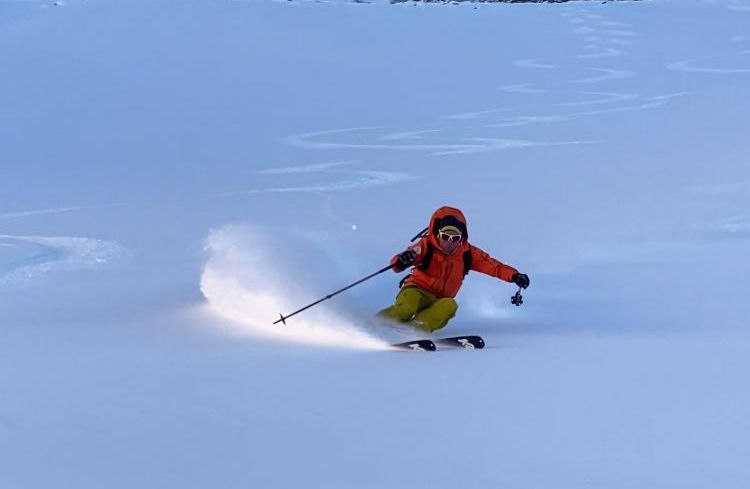
You're standing at the top of a steep run. Your ski buddy says, "You got this." And two questions hit you at once. Do I have the skills for those first four turns? And after ten laps, do my legs have anything left?
We can't fix the first one today. But the second one, the fitness part, is totally within your control. With about eight weeks until most of us click into our bindings, now is the perfect time to start a ski conditioning program.

On the latest episode of Where to Ski, I headed to Boulder, Colorado, to talk with Connie Sciolino, owner and head coach of the Alpine Training Center (ATC). Connie has a master's degree in exercise science from Montana State and a strength and conditioning certification from the National Strength and Conditioning Association. She also skis, runs and rock climbs, which, let's be honest, is basically the entry fee for living in Boulder.
Here's her blueprint for getting ski-fit this fall.
Your Summer Activities Already Count
Good news first. If you spent the summer hiking, biking or running, you haven't wasted your off-season. According to Connie, all that "normal stuff" built your aerobic base, which is the foundation every ski workout sits on.
The ATC's preseason ski training program is mostly about strength and mobility, but every athlete walks in with that aerobic base already in place. So think of fall training as the next step: add strength, add mobility, and add confidence for this winter.
Build "Balanced Strength" to Prevent Injuries
Connie's first priority is total-body strength, plus something she calls balance strength. That means two kinds of balance:
Front to back: your hamstrings need to keep up with your quads, which helps reduce injury risk.
Side to side: both legs need to be equally strong. That's why single-leg training is such a big deal right now.
Then comes mobility, which keeps you agile through a long ski day and helps you recover so you can ski day after day.
The Best Exercises for Skiing
The ATC's gym work happens on the floor, with a few staples:
Bulgarian split squats (rear-foot-elevated split squats). They build strength, mobility and balance at the same time, which is exactly why people hate them. Balancing and staying strong on one leg is a key skill on skis.
Squats and deadlifts. Front squats load the quads and core, while back squats lean more on the hamstrings and low back. Connie alternates between them.
Jump and landing drills. Connie calls skiing very dynamic, saying "in each turn, it's almost like you're landing." She progresses from drop squats to drop squats onto a single leg, then jumps with single-leg landings.
Box jumps. Start with two-foot takeoffs and landings, then move to landing on one foot, and finally one foot to one foot. Standard heights are 20 inches for women and 24 for men, but she'll start beginners lower, even on stacked 45-pound plates, to build confidence.
Training at home? A BOSU ball is a fun, versatile tool. Try squats on it, forward or reverse lunges off it, lateral lunges, and hip bridges or hamstring curls with your heels on top. You can do two feet first, then progress to one.
How Many Sets and Reps?
For squats, Connie has athletes work up to a weight that's heavy for six to eight reps. They start with three sets early in the month and build to four or five solid sets by the end. Deadlifts go a bit lighter with more volume to reduce injury risk: three sets of eight to start, building to four or five sets of eight to ten reps.
Why higher reps? A ski day is a muscular endurance event that can last four, six or even eight hours. Strength keeps you efficient and cuts fatigue, so your form holds up on the last run of the day.
Don't Skip Hip Mobility
Skiing is a hip-dominant, sideways sport. Most of our summer sports (running, hiking, biking) keep us moving straight ahead. Then winter hits and suddenly everything is lateral. That's why Connie loads up on side planks with leg lifts to target the glutes, along with what she calls "Jane Fonda exercises": mule kicks and side leg lifts on your hands and knees. ("She knew what she was doing," Connie laughed.) Add cat-cows and bird dogs to keep your lower back loose, and band monster walks in every direction as a warm-up.
Train Like a Ski Run: Aerobic Plus Intervals
A ski run is a short, hard burst, maybe 20 to 30 turns, followed by a rest on the chairlift. So your ski fitness plan needs both:
Aerobic work: steady effort you can keep up for 30-plus minutes, like biking. Start at 30 minutes in early October and build to 90 by late November. You should finish feeling good, not wiped out.
Anaerobic intervals: after an 8-to-10-minute warm-up, do 20 to 30 seconds at 80 to 90% effort with 60 to 90 seconds of rest, four to six times. By late November, push to 60-second efforts with two-minute rests, six to eight rounds.
A Sample Weekly Ski Workout Schedule
Here's how Connie would lay out a week:
Day | Workout |
1 | Strength |
2 | Aerobic |
3 | Strength |
4 | Aerobic |
5 | Intervals (anaerobic), or a third strength day if you're experienced |
6 | Rest or a "fun day" off-program |
Putting an aerobic day after each strength day gets blood flowing to sore muscles. Don't put a hard strength day right after intervals. New to lifting? Stick with two strength days. And plan your session the night before, because Connie says an hour a day is plenty if you aren't wandering the gym deciding what to do.
Tips for Women and Older Skiers
Women face a higher risk of ACL injuries, partly because of hip-to-knee alignment, so hip strength to protect the knees is key. Men tend to be less mobile and see more back issues, so they benefit from extra mobility work. Connie's rule: "You can never go wrong with some mobility."
For older skiers, strength, balance and mobility matter even more, and so does recovery. Use lighter weights but keep the volume, and plan recovery into a five-day ski trip, not just the lead-up.
The Bottom Line
You don't need to be a world-class athlete to ski stronger this season. Build on your summer base, add two or three strength days focused on single-leg work and hips, mix in intervals that mimic a ski run, and give yourself at least one rest day. Start now, and when your buddy says "you got this," your legs will agree.
Listen to the full conversation with Connie Schiolino of the Alpine Training Center on Where to Ski, wherever you get your podcasts. And before your first day on snow, gear up at backcountry.com with code WHERETOSKI.
Episode Transcript
Welcome to Where to Ski. I'm John Morgan. Have you ever been at the top of a run and your instructor, a guide, or your ski buddy says, hey, you got this? Yeah, I have.
It's sometimes intimidating. First thing I think of is, well, do I have the skills to go down and make those first four turns? Or am I physically able to do this run after taking 10 high-speed runs somewhere on a mountain? Well, today we're going to help you have the confidence you need on that second question. To do that, we're going to Boulder, Colorado, to the Alpine Training Center to help us prepare for ski season.
I know there are some things I can do to have more fun and feel better when I start making those runs this year, so I reached out to Connie Schiolino, the owner and head coach of the Alpine Training Center. With a master's degree in exercise science from Montana State and a strength and conditioning certification through the National Strength and Conditioning Association, she's the ideal person to help. On top of that, she loves skiing, also running and rock climbing, but that's also kind of the entry fee to living in Boulder.
So after a quick break, we'll talk to Connie. I always need new stuff, and I go to backcountry.com to get it. They have the best selection of ski gear and their gearheads check out every piece.
They're hooking up Where to Ski listeners with a discount. Just use code where to ski at checkout or hit the link on our website. That's backcountry.com. Connie, welcome to Where to Ski.
Very excited to be here today. Oh, well, we're psyched to have you. I think a lot of people, I'm like a lot of people, I do a lot of normal stuff from spring through the fall, but I don't train specifically for skiing.
And I don't focus on a programmatic approach. And you do this all the time. What are the underlying tenets you use of getting ready to be on the snow? Well, John, I'm glad you asked.
And I'm glad you brought up the point of the normal stuff that you do in the off season. So that's actually very important as we lead up to a ski program. So you are really, whether you know it or not, developing your aerobic system, which is great for skiing, but also great base fitness as we move into our preseason training for skiing.
So our programming at the Alpine Training Center, or we call it the ATC, is largely strength focused and mobility focused. But all the athletes come in with a good aerobic foundation from which I can help them build. So all that summer stuff is still very important.
And then we're just going to take the next step in the fall and add some strength, add some mobility, and add some confidence to your skiing this winter. That's awesome. I could always use more confidence.
Strength and mobility, I try to work on, but I need some coaching here. I need some coaching. So we're like eight weeks away from when people really start skiing.
Not everyone is or wants to be a world-class athlete. What can, let's say, I or our listeners do to build specific strengths and capabilities that are needed for skiing? So right now, this is the best time to start working on your strength. So total body strength, and then also what I call balance strength.
So we need to be balanced front to back. So if we think about quads and hamstrings need to be balanced, and we need to be balanced right to left. So that's when you hear all about the single leg strength.
It's kind of a big name in strength training these days. So going from side to side, we need to be balanced in that way. So we do a lot of that right now where we're really trying to balance those hamstrings with the quads to help reduce the risk of injury.
And then being strong on both sides. So single leg work or single-sided work. We do a lot of that stuff right now.
And then mobility to be agile and be ready for a long ski day. And that also helps us recover so that we can do it multiple days in a row or multiple days throughout the season, wherever you're at. Interesting.
Do you have some specific examples you can give us about some of the exercises that might work? You know, I've got a vision in my head of like standing on a BOSU ball or something like that. Yeah. So the BOSU ball is great for squats.
So just two-legged squats on the BOSU ball. And then you can switch to a lunge off the BOSU ball. So either stepping back or stepping forward on the BOSU ball.
So that gives us that single leg strength, very hip dominant with the lunges. The BOSU ball can also be great for some hamstring curls. When you're laying on the ground, put your heels on that BOSU ball and do some hip bridges.
You can do it two-footed. And then you can do it single foot again to get that single leg strength. So the BOSU ball is great.
You can do lateral work also off of that thing, do a lateral lunge, or do some squats with one foot on the BOSU ball, one on the ground. There's a million different exercises I could tell you about. But that's a great tool, especially at home.
It's fun to play around on. It keeps you interested. And then you can always do some core work on that thing.
Do some sit-ups on the BOSU. You can flip it over. You can use it for some push-ups to get some upper body work.
So lots of different things there to play with. When people go to your center, what do you put them on? What type of, you know, I just pulled BOSU ball out of the thin air here. I happen to be looking at one right now, actually.
Actually, I have one right beside me too. At the gym, we do not use BOSU balls. We're just on the ground.
So on the gym floor, we will do some single leg squats with the rear foot elevated. You can use the BOSU for that. So a Bulgarian split squat.
We do that a lot as we prep for skiing because not only does it develop strength and mobility, but balance. So balancing on that one leg and trying to be strong in that position is a key factor when you're skiing. So that's the Bulgarian split squat or a rear foot elevated split squat.
But other than that, everything is done on the ground. That's it. And what about weightlifting? Straight old, you know.
Straight old weightlifting. Like we are about to start our ski program at the ATC and like one day we'll do squats. One day we'll do deadlifts.
And one day we're going to do some conditioning. So the conditioning, that aerobic fitness, and then we'll add some anaerobic fitness to that. So if you think about when you're skiing, it's kind of a time dominant sport where you have, you know, maybe 30 seconds to a minute where you're skiing down and sometimes at a high intensity.
And then you get a good rest riding up the lift, whether it be, you know, some lifts are two minutes these days and some, you know, a little bit longer. But preparing for that high intensity and then a rest interval. So we'll do some of that at the gym also.
So in terms of doing some of this, are there, what would you recommend for somebody that's been doing some exercise, but it's just really getting started into a fall program to get ready for skiing? What kind of numbers, reps and sets and things like that would you recommend? We typically will start with, if we use a squat, I'll use a back squat or a front squat, kind of depending on the athletes that I'm working with. Front squat is great for loading the quads and loading the anterior core, where back squat is a little bit more hamstring, low back dominant. So we kind of switch back and forth between those.
So I'll have the athletes work up to something that's heavy for them in the six to eight rep range, and then we'll do anywhere from three to five sets. And that's kind of a progressive thing at the gym. So we'll start with maybe three sets the beginning of the month, and then I'm going to build them up to by the end of the month, we're doing four to five solid sets at a challenging weight for them.
So easy to start progressing their weight. We'll do the same thing with deadlifts. Deadlifts, we do a little more higher volume, a little less weight to help reduce the risk of injury while they're lifting.
So maybe we work up to a heavy eight. And then the beginning of the month, we're doing three sets of eight. By the end of the month, we're looking at four to five sets of eight to 10 reps at a challenging weight.
At a challenging weight, but not overdoing the weight because if I remember right, if you do, if you go heavy on weights, you build more bulk than just strength. And if correct, yeah. And if you go a little lighter, you're building the strength with and I can't remember some of the other effects.
It's been a long time since this was explained to me. Yeah, so you're building a little bit more muscular endurance with a higher rep range. So when we're in the eight to 10 rep range, you're looking at muscular endurance, which is great for skiing because it, you know, as much as an aerobic sport, it's also an endurance sport because you're looking at for a lot of people a multi hour event where you need to be strong over three, four, six, maybe eight hours of skiing in a day.
So that's really a muscular endurance event also. But the high strength helps, really it helps keep you efficient throughout the day also. So it helps decrease fatigue throughout the day so you can keep good form while you're skiing and then help you last longer throughout the day.
So you were, originally you were talking a little bit about flexibility too. I think that was the word. Mobility, yes.
Mobility. And so what's involved with that? What's involved with mobility? Let's go down that rat hole a little bit. Exactly.
So lots of ways to go, but as we talk about skiing, probably the most important is maintaining good mobility through the hips. So skiing is a very hip dominant sport. So strong core, strong back, lateral movements, those glutes are huge.
So we do a lot of lateral stuff to help strengthen the glutes. If you look at the glute maximus media, so any kind of side plank position, a side plank where we're doing a leg lift, holding or movement helps build that muscle, but also be able to move in a range. So if I'm looking at mobility, I'm looking at strength through range of motion.
So I need to be able to keep those hips moving. So those, the side stuff is huge because we spend so much time in that frontal plane moving forward. If we're running, if we're hiking, if we're biking, we're all in that frontal plane moving.
And then all of a sudden you're going to switch to skiing, which is almost all lateral. So we need to not only build that lateral strength, but be able to move in the lateral strength. And then we go back to some of the typical Jane Fonda exercises when you're on your hands and knees, you know, and you do the leg lift stuff.
It's actually if you're moving, you know, the leg through range of motion, you know, she knew what she was doing, you know, I don't think anyone appreciates it anymore. But we do do a lot of those exercises just to keep mobility through the hips. So if you think of those Jane Fonda exercises, you know, like, they have like the mule kicks and lift the leg to the side and those kinds of things.
We have a whole series that we call the hip mobility series that we do often, you know, if it's, you know, not every day, we're hitting it once or twice a week in the gym. And the athletes use it at home. Also, it's great for really any sport.
And then, you know, some low back movements, so cat cow, bird dogs, those kind of exercises to keep mobility through the whole spine, but mostly through the low back. So that doesn't tighten up, you know, as we're lifting and keep it loose while we're skiing. Interesting.
Do you use bands a lot? Yes, we do bands predominantly as a warm up for mobility, like the the monster walks. You can do it laterally, you can do front to back. It's an easy exercise for anyone to learn.
You can do it anywhere, anytime. So yeah, that's a great warm up really for anything that we're going to try to target that day. If we're trying if we're doing squats, if we're doing deadlifts, any of the single leg work, we do a ton of those monster walking things in all in all planes.
And then we'll also use like at the beginning of a cycle, like, as we start our, our series, we'll use the bands as we squat one to help mobility, but also to help the athletes identify good movement patterns. So we're really targeting the glutes. As we do our squats, or as we do our deadlifts, it's a good it's a good cue for them.
And not just a mobility tool. So yeah, we have those things out a lot. But let but balance stuff like that.
What? How do you work with that with some of your athletes? So we do the that Bulgarian split squat is a great balance exercise, combined with strength so that one of the reasons people really dislike Bulgarian split squats is because it requires so much strength and balance combined when you're trying to combine two things. It makes the exercise that much harder. Then we also do some jumping landing drills.
So initially, in these next couple weeks, we'll do some drop squats, we'll do drop squat to a single leg. And then we'll start adding a jump into single leg landing and work on not just the balance, but the landing position. So skiing is very dynamic.
And in each turn, it's almost like you're landing and you need to prepare the body for that, not only the impact, but being able to land correctly. So a lot of jumping or landing is really what we're looking at that I use to prepare them for or help with their balance. Box jumps help with that? Yes, definitely.
So starting with two footed box jumps, take off to land two, and then progress up to take off to land one. And then for the serious athlete take off one land one. So yeah, full progression.
When you start with someone who's not a serious athlete, how high do you start off with? What's sort of the first range of box jump you try and work with? Every trip I take, I travel with Global Rescue. Something goes wrong in the mountain, or actually anywhere, they get you out. Couple this with trip insurance from IMG, and it's an unbeatable combination.
Use code where to ski at globalrescue.com, or hit the link on our website for a discount and travel with confidence. I kind of look at age range and what might be expected in that age range. So in my 20 to 40 years old, we usually start at a 20 inch box.
And then as you progress past that 40, I have some 14 inch boxes. I also have the ability to stack 45 pound plates. So especially for women that are first starting to jump, you know, I'll just stack, we could start with just one plate, just so they build confidence, and then slowly stack that up and progress until they're up to the 14 inch box or up to the 20 inch box.
But standard would be 20 inches for women, 24 for men. And that brings up a good point. I was going to ask you about this.
Is there a difference in the program you'd recommend for women versus men? Their bodies are different. Their flexibility is different. They're built differently.
They are built differently. And women, you have to be a little more cognizant of ACL injuries. Women are more prone to ACL injuries.
Really? Yes. Just because they're built differently. So the shape of their hips, little wider hips coming narrow as it comes down to the knee sets them up for a higher risk of ACL injuries.
So when I program, I look at that, like I'm in a mixed setting. So I have men and women, knowing that women are going to be at greater risk for an ACL injury. I'm going to make sure everybody is injury proof on that level.
And then in general, men are not as mobile as women. So I'm taking that into account too. So I'm going to throw as much mobility into the programming, whether the women need it or not.
You can never go wrong with some mobility, but trying to cover the extremes for everybody. So it's kind of a cross section, but you're correct in that women's bodies are a little different. They might require a little bit more strength, especially through the hips to protect the knees.
Men in general, we see some more back issues, whether it's pain or reduced mobility in the spine, and that's going to contribute to other issues down the road. So we can help target that by more mobility for our men. Okay.
Now that helps. I didn't know that women were more at risk for ACL injuries. I learn a lot new every time I talk to someone.
Yeah, that's good. So along that line, you said you started talking a little bit about age differences too. As people age, their strength starts to go away.
Flexibility starts to go away. Balance starts to go away. All that stuff deteriorates, I think from age 23 onwards.
Exactly. We are all well past our prime. Well, that's a different problem.
Well, it is a different problem, except you got to work through it to be able to still keep skiing and do it effectively. Exactly. So for the older skier, probably more important than younger skiers to work on strength, maintain that strength, that balance, and that mobility just so they can keep skiing and be strong, reduce that risk of injury.
And then the other thing you need to think about in an older athlete is recovery. When you were 20, you could ski day after day after day and it didn't matter. Now you put a couple of days in a row and you're like, I need a day off.
So you need to think about how you're going to recover if you're looking at a ski trip where you have five days of skiing in a row and you want to maximize that ski trip. You need to work on recovery also as you lead up to the trip and then while you're skiing. So the older athlete has a lot of work to do, really, to work on their strength, to work on the mobility, their balance, and their recovery.
Do you recommend the same number of reps for them, but maybe a lower level of intensity? Yes. So probably lower weight, but try to build them so they can do that volume of training. So that's what I like to see in them, if possible.
Obviously, everybody's different. So in our gym, we have small group training. So I have max 10 athletes in there.
So I can adjust on the fly to kind of monitor the athlete and see how they're doing. And if I'm working with someone one-on-one, obviously, I can adjust as we go. So depending on their tolerance to the weight and sets, and part of that is their training history.
Have they been doing it since they started skiing or this is new? It's going to be very different between those two athletes. And you talked earlier about a little aerobic and even some anaerobic work. What are you talking about? A lot of people may not be able to sort of slot the difference between aerobic and anaerobic.
I view aerobic work, I do a lot of bike riding, doesn't get me anaerobic, but it plays. Aerobic work is something that you can maintain for a long period of time. And we're thinking long period in like greater than 30 minutes.
So a continuous activity that you could do for 30 or more minutes. So that's why biking is like the perfect example. So at a pace or speed that you could keep going for 30 minutes.
So that's kind of like if you think of like the fitness pyramid, the bottom of the pyramid is that aerobic base, being able to maintain movement for longer periods of time. And that base allows you to build strength and build anaerobic. The anaerobic are like those very short, high intensity time blocks.
So we're looking at maybe 60 seconds max, but more in the 20 to 30 seconds where you're going 80 to 90% of max. And then you have a good long rest after that. And you're resting maybe 60 or 90 seconds.
So that kind of plays into skiing where you're skiing down hard for whatever it is, 20, 30 turns, and you stop and you're breathing heavy and you kind of rest, you stand around, you chat a little bit for a minute or two, and then you're ready to go again. So we need to build that kind of anaerobic strength into our programming when we're thinking about skiing. How would you design a program? Let's start off on Monday and say, between now and the end of November, I'm going to start a program that's going to get me in shape for skiing.
Should I plan on like two or three days a week of aerobic work, a day of anaerobic, and then a couple of days of strength and flexibility? How would you balance all that? I would probably do probably two days of aerobic work. And one day where you're doing anaerobic work. So I have three days there.
And then two to three days of strength. For someone new to strength training, I would probably keep them at two days. Someone that has more experience, I would go to three days, and then have one day that's complete rest or fun day where you go do something that's not on the program.
So it doesn't become a job to get ready to go skiing. But yeah, on my aerobic days, depending on where the athlete is to start, minimum 30 minutes up to 90 minute max for a workout or a training session. And that would be built up like beginning of October, say we're at 30 minutes, and that feels good.
So from the beginning of October, I want to build that number. So at the end of November, I can do 90 minutes at a shot and still feel good. You shouldn't come off of those aerobic sessions.
Like, I cannot do anything the rest of the day kind of feeling but you're like, okay, I did something I can still go to work and feel good, you know, so it's, it's a pace that you can maintain for a long period of time, and it shouldn't exhaust you. But you know, the accumulation will make you fatigued, but you should be able to get up the next day and do the you know, do whatever you need to do. And the aerobic of the excuse me, the anaerobic is kind of the same thing you're going to do short and hard.
So maybe we start with like 20 to 30 second intervals on a 60 to 90 second rest after a good warm up a good warm up being like eight to 10 minutes of aerobic work before I start that anaerobic stuff. And then initially, I might do you know, four to six cycles of that high intensity, and then a cool down. But then throughout the next two months, I'm going to not only increase the time in that anaerobic zone.
So I'm pushing by the end of November 60 seconds at high intensity on probably a two minute rest and looking to do six to eight cycles of those. So I'm pushing the time and pushing the volume on that one. That one's going to make you feel a little bit more depleted.
So you don't want to follow that with like a super hard strength day the following day. So you kind of have to plan your week knowing that that's going to be a hard one. Strength stuff could leave you sore.
So typically I have my athletes do a strength day, followed by an aerobic day. So that kind of helps like not only build that aerobic base, but it gives them some recovery and it allows you know, some good flow, excuse me, blood flow to the muscles to help them recover and get ready for another strength day. So I'm doing strength, I'm doing aerobic, I'm doing strength, aerobic.
And then either a day off, or I would do my anaerobic on the fifth day, and then take a day off. But obviously, you know, the timing is, you know, up to the schedule of the athlete, you know, that's in a perfect world where you don't have anything else going on, you know, free reign of your time. But that's kind of how like, I try to set it up for my athletes if I can, and always regardless, try to squeeze in a rest day for them throughout the week.
Yeah, and then my Garmin watch squawks at me going, you had an easy day, you better pick up the pace, buddy. I know exactly. Mine does that too.
Are you going to do something before you go to bed? I wasn't planning on it. How much time a day do you think people should try and allocate to trying to get in shape? Is an hour a day enough? I think an hour a day is enough. I mean, I think if you do a little pre planning, and know what you're doing that day, maybe have it lined out the night before, you can certainly get it all done in an hour.
It's when you go to the gym, and you're like, Oh, what should I do today? And you wander around, you do a little this, a little of that, the next thing you know, it's like two hours, you're like, wow, this working out takes forever. But it's really, you know, due to lack of planning. But like all of my strength sessions at the gym are planned for an hour.
And that includes a warm up, it includes our mobility and prep work. And then if we're doing strength, or if we're doing conditioning for the day, and then some kind of cool down. So with my obviously, I've been doing it for a while.
So I know how to plan it, but I can get that all in in an hour. It's a packed hour. I'm not gonna lie, you know, we are moving for an hour.
But then the athletes leave, and they know they've done everything for that day. Like they don't have to go home and do more mobility. They don't have to go work on their balance.
They've done it in that hour. And then the next day, they're like, well, I got to go ride my bike for an hour. And that's it, you know, and they can just plan it out that way.
So in general, an hour should be plenty. So you talk about cool down. I'm really bad at that.
I'll just get through it. I'll get through with my program. I'll just go.
Okay, done. Tell me about how important that is and how badly I'm screwing up. Well, you've made it this far.
So it can't be that bad. But what the cool down does is actually helps the recovery process. So it's gonna

Comments